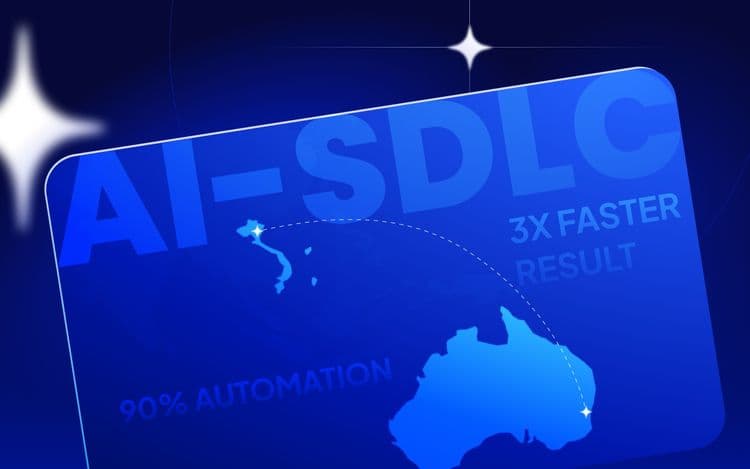
Techvify AI-SDLC Delivered 3× Faster Results For Australian Fintech Leader
An AI-orchestrated SDLC with a multi-agent copilot and LLM Gateway that turned a fintech leader's release cycle into weeks.

Spec-to-Ship Pod · Forge Spec
A Spec-to-Ship Pod takes each feature from request to tested code through a spec, a plan and a task list your team can review before any code is written. It works in your repository on Forge Spec, and the workflow stays when the pod leaves — so every feature after that starts the same way.
In the box
One install, one versioned plugin
0
skills
One per step of the flow — constitution through acceptance.
0
expert personas
Analyst, architect, API, review, security, performance — on call, never blocking.
0
worker agents
Spawned for isolated or heavy work: frontend, backend, debugging.
0
guardrail hooks
Fire at session start, before a write, and as the edit lands.
0
artifact templates
Constitution, spec, plan, tasks, checklist and test cases.
0
tool bridges
Repo graph, document conversion, design and tracker, wired on install.
None of these are loose parts. Each skill hands its artifact to the next, the hooks enforce the same standards every one of them reads, and the whole chain has been tuned and verified on live client delivery.
The artifacts are plain markdown, so all seven major AI coding agents read the same spec, plan and tasks.
Who it is for
It earns its keep where the same decisions get made over and over. Where there is nothing to repeat, it is the wrong tool.
The output
Not a sample we wrote for the website — the actual spec, plan and task list that produced the site you are reading, committed in its repository.
FromOne folder, per feature, in your repository
Acceptance Scenarios
1. Given the landing page is loaded,
When the presenter scrolls top to bottom,
Then all six sections appear in order
with no layout shift.
2. Given the user prefers reduced motion,
When the page renders,
Then loop animations are disabled and
content stays fully readable.Acceptance criteria a tester can run without asking a question.
## Technical Context
Language: pinned, with the runtime version
Testing: the project's test runner
Performance: LCP < 2 s on landing
filter response < 100 ms
payload < 500 KB per page
Constraints: no runtime fetch
server rendering by defaultConstraints written down before code, so review has something to check against.
- [X] T032 [P] [US1]
Create BrowseByType.tsx — three link
cards, one per type, live counts.
- [X] T033 [US1]
Create app/page.tsx — composes Hero,
StatStrip, CuratedRow, BrowseByType.
- [X] T034 [P] [US1]
Create marketplace-card.test.tsx —
card click, copy button, badge.Every task names its file. [P] marks what can run in parallel.
Members see the filenames and the unredacted stack. Sign in
Enforcement
A blocked edit costs seconds; the same mistake caught at review costs a day. Every checkpoint lands before a reviewer sees the code.
At session start
Before the agent reads anything
Rules survive a long session
Your non-negotiables are re-injected when the agent’s memory compacts.
The repo map is kept fresh
A stale code graph is worse than none — and confidently wrong.
Before the write
These two can refuse
Context is a precondition
Your patterns, and the design behind the file, must be read before it can be written.
Protected files are refused
Environment files, lockfiles and build output are blocked, not warned about.
As the edit lands
Runs on every change
Agent skills are scanned
Editing an agent skill triggers a security scan of its directory.
Formatting never reaches review
Formatters and linters run as each edit lands, so review is about the change.
Code review
Where most teams put all of this
By the time a change arrives here it has already been written, read and rewritten. That is the cost this replaces.
Both directions
Greenfield is the easy case. Coming back to a spec six months later is the one that decides whether any of this held — so it takes the same path, plus one step.
The greenfield path — context first, code last.
Define context
Vision, architecture and coding conventions, written once per project.
Write the spec
A clear feature spec before any code exists.
Plan tasks
The spec broken into task chunks before implementation starts.
Generate code
Code plus unit tests, with a worktree per task so work runs in parallel.
Review and ship
Review agent, then the pipeline and a static-analysis scan before merge.
The path most tooling forgets — and the one you spend years in.
Load the task
The existing task list is loaded; pick the change or add one.
Find the root cause
The agent reads the codebase against the spec and proposes a scoped fix.
Make the change
Scoped to that task, in its own worktree so parallel fixes cannot collide.
Verify no regression
Review plus the full suite — the fix must prove it broke nothing else.
Update the speccloses the loop
The spec and task status are updated, and a changelog entry appended.
Portfolio
An AI-orchestrated SDLC with a multi-agent copilot and LLM Gateway that turned a fintech leader's release cycle into weeks.

A greenfield Azure product built by a lean 6-person team using a fully AI-driven development lifecycle from day one.
View case study
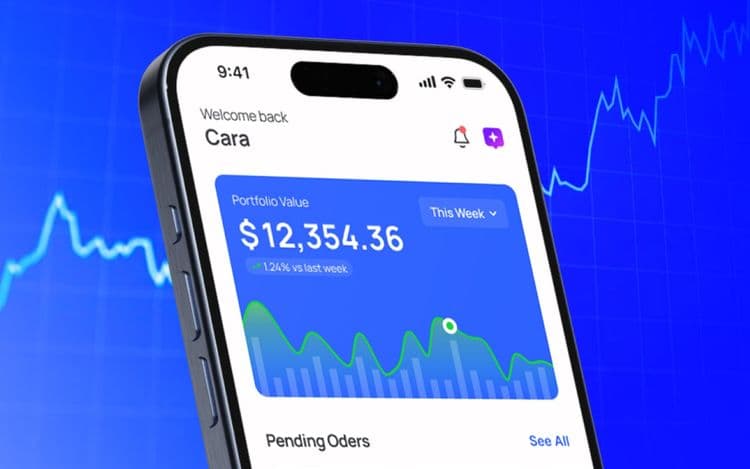
A cloud-native, Agentic AI trading app with predictive insights and a premium cross-platform UX, built in six months.

A three-year staff augmentation partnership scaling an Australian IT agency's custom software, web, and AWS delivery.

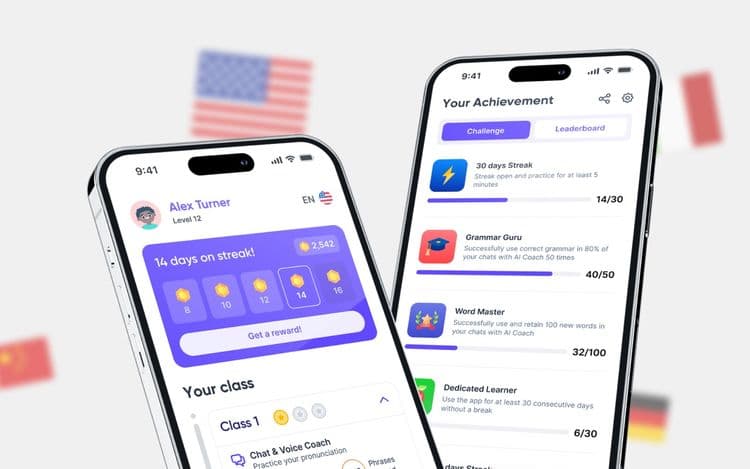
A GenAI e-learning platform with personalized coaching, dynamic lessons, multilingual NLP, and gamified progress.

A three-platform logistics ecosystem with AI route optimization, a CarPlay courier app, and real-time customer tracking.

A Smart Retail CRM with AI vision, CCTV alerts, footfall heatmaps, and a store scheduler unifying every store location.

Fits your estate
It installs into your repository and reads from the systems you already run. No portal, no second backlog, no lock-in beyond markdown you own.
Runs inside your AI coding agent — any of the seven major ones
Reads from
Your work tracker
The ticket that starts the work
Figma
Components and states, not a screenshot
Your code graph
Every call site, before it refactors
Forge Spec
installed in your repository
Writes back
The artifacts
Committed beside the code they govern
Working code
Task by task, every diff reviewed
Evidence on the ticket
Pass/fail and linked bugs, back where it started
The ticket it started from is the ticket the evidence lands on
Each extension adds commands to the workflow your team already runs. It installs into one repository at a time, so a project carries only the ones it uses — and teams contribute new ones through the same review: a security scan and a test install in a clean project before anything is listed.
5 extensions in the catalog
3 commands
4 commands
1 command
1 command
5 commands
Members only
5 extensions · 14 commands · in the members-only guidebook
Sign in to unlockStart
We take one item from your backlog and walk what a Spec-to-Ship Pod would produce for it. No obligation attached.